Leave Your Message

10 Cable Knit Sweatshirt Buying Tips for Global Buyers?

Buying a Cable Knit Sweatshirt for global markets involves more than choosing a warm, attractive design. Buyers must examine fiber content, yarn quality, cable definition, sizing, production capacity, and total landed cost. A soft sample may look excellent under showroom lights, yet pill after several wears or shrink during washing.

Professor Sandy Black, a respected fashion sustainability scholar, has warned that “fashion is one of the most polluting industries in the world.” Her observation gives this purchasing decision wider importance. Responsible buyers should ask where the yarn comes from, how the garment is dyed, and whether suppliers can provide consistent quality records. Traceability matters.

Small details matter.

These ten Cable Knit Sweatshirt buying tips are designed for importers, retailers, sourcing teams, and private-label brands. They cover practical checks, including gauge, stitch tension, seam strength, color accuracy, care labels, minimum order quantities, packaging, and delivery planning. A buyer should compare samples against measurable specifications, not memory or attractive photography.

No checklist removes every uncertainty. That is the uncomfortable part. Natural fibers can vary, markets interpret fit differently, and production schedules can change. Experienced buyers leave room for testing, corrections, and honest supplier communication. They also inspect garments in realistic conditions: folded in cartons, worn over shirts, washed repeatedly, and viewed in natural light.

The goal is not simply to find a beautiful sweater. It is to select a dependable product that performs consistently across customers, climates, and sales channels.

10 Cable Knit Sweatshirt Buying Tips for Global Buyers?

Define Your Target Market and Cable Knit Sweatshirt Requirements

Define Your Target Market and Cable Knit Sweatshirt Requirements

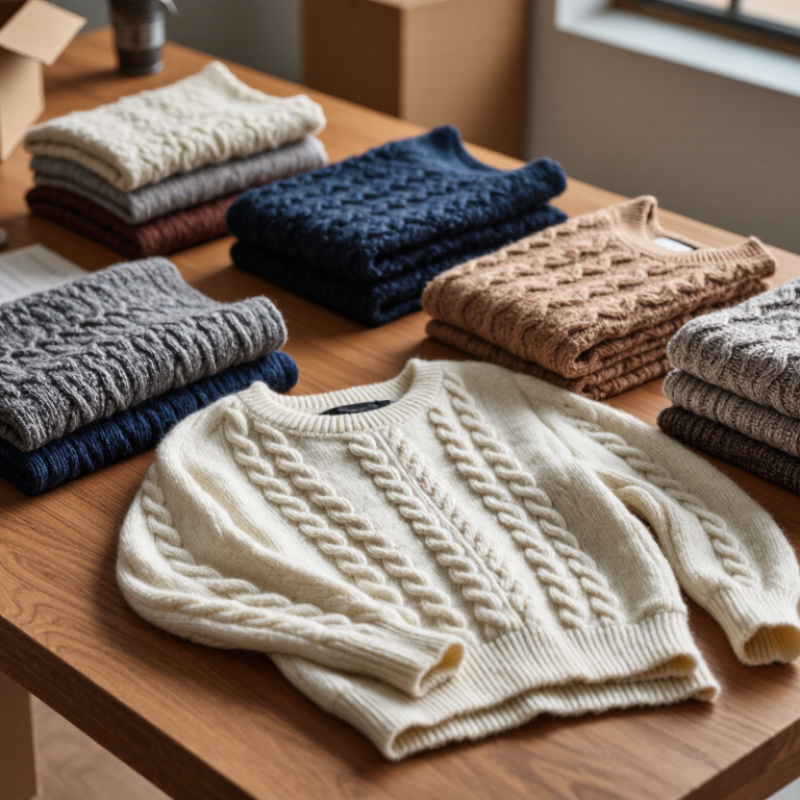
Before contacting suppliers, describe who will wear the cable knit sweatshirt. A coastal market may prefer breathable cotton blends and lighter cable patterns. Colder regions may require wool blends, brushed interiors, and heavier fabric weights. Consider age, gender preferences, local climate, and expected retail price. A premium customer may accept complex knitting, while budget shoppers often value easy care and consistent sizing.

Build a written product brief with measurable details. Specify fiber content, fabric weight, cable scale, neckline shape, cuff recovery, and available colors. Include a size chart using chest, sleeve, and body measurements. Do not rely on “standard” sizing. It varies between markets. Request a physical sample before approving bulk production. Check seam strength, surface pilling, shrinkage, and color performance after washing. Small issues become expensive at scale.

Use real customer feedback when refining the design. A sample may look attractive but feel too heavy during indoor wear. That happened in one seasonal test. The team had focused on warmth and overlooked room heating. Reconsider the packaging and care label requirements for each destination. Confirm fiber declarations, washing instructions, and applicable product safety rules with qualified local specialists. A clear specification protects quality, but it cannot replace hands-on inspection.

Evaluate Yarn Quality, Knit Structure, and Fabric Performance

10 Cable Knit Sweatshirt Buying Tips for Global Buyers

Evaluate Yarn Quality, Knit Structure, and Fabric Performance

A cable knit sweatshirt starts with yarn, not the cable pattern. Check fiber composition, staple length, twist, and evenness before approving samples. Long, consistent fibers usually reduce fuzz and weak spots. Hold the yarn under light; visible slubs may signal character, but repeated thick areas suggest poor control. Textile Exchange’s Materials Market Report 2024 recorded global fiber production at 124 million tonnes in 2023. That scale makes traceability and material verification increasingly important for international buyers.

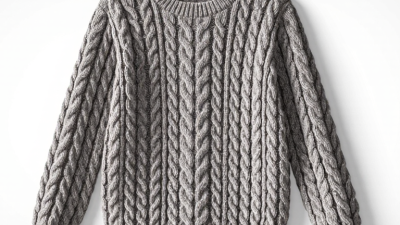
Examine the knit structure closely. Count the cables per width, inspect rib recovery, and compare stitch density across the body and sleeves. A loose structure may feel soft, yet it can stretch unevenly after washing.

Request dimensional-change testing under ISO 5077 and pilling evaluation under ISO 12945-2. For heavier sweaters, bursting-strength testing under ISO 13938-2 adds useful evidence. Small differences matter.

Ask for a washed sample.

I have seen attractive showroom pieces lose shape after one cycle. That failure is easy to miss during a short fitting. Compare pre-wash and post-wash measurements, especially at the hem, cuff, and shoulder. Check abrasion resistance under ISO 12947 when the garment targets frequent wear.

Reports help, but they are not perfect. Yarn blends, dyeing, finishing, and machine settings can alter results. Buyers should review test conditions, not only the final numbers. A supplier’s confident claim still needs physical proof.

Check Sizing, Fit Standards, and Customization Options

When buying cable knit sweatshirts for several markets, sizing cannot rely on one chart. Measure chest, body length, shoulder width, and sleeve length in centimeters. Compare these figures with a physical sample, not only a supplier’s spreadsheet. Ask whether measurements describe the garment flat or after gentle stretching. That difference matters. Cable knit structures can relax after wear, while dense cuffs may feel tighter than expected. Confirm measurement tolerances with the factory before placing a large order.

Fit standards also vary across regions and customer groups. A medium in one market may feel like a small elsewhere. Check whether the sweatshirt uses men’s, women’s, or unisex grading. Review sleeve proportions carefully, especially for taller customers. Request a wash test for shrinkage, pilling, and shape recovery. Cold washing is not enough evidence if customers commonly use warm cycles. I have seen attractive samples lose length after washing. It was an avoidable mistake.

Customization involves more than choosing a color. Buyers can adjust cable width, stitch density, neckline shape, cuff height, yarn composition, and body silhouette. Ask for fiber percentages and finished garment weight. A heavier knit may improve warmth but increase shipping costs. Request a size-set sample, not just one medium. Record every approved measurement in a technical sheet. Include tolerance limits, artwork placement, and packaging details. Some buyers skip this step, then discover that “custom” still means a standard fit. That assumption deserves another review.

10 Cable Knit Sweatshirt Buying Tips for Global Buyers: Check Sizing, Fit Standards, and Customization Options

No. Buying Dimension What Global Buyers Should Check Practical Benchmark or Standard Customization Options Recommended Action
1 Size Conversion Confirm whether the supplier uses body measurements, finished-garment measurements, or a regional size label. Use a measurement chart in centimetres or inches. EU, UK, US, and Asian size labels are not automatically equivalent. Create a private-label size chart, dual-size labels, or market-specific grading. Approve a signed measurement spec before sampling.
2 Chest and Body Width Measure the garment flat from underarm to underarm and multiply by two for the finished chest circumference. Allow ease according to the intended silhouette: close fit usually needs less ease than relaxed or oversized styles. Adjust chest width, side seams, drop-shoulder width, and body shape. Compare the sample with a well-fitting reference sweatshirt.
3 Length and Proportion Check body length, sleeve length, shoulder position, rib height, and how the cable pattern aligns with the hem. Record each point of measure from a fixed location, such as the high shoulder point or side neck point. Offer cropped, regular, longline, boxy, or extended-size proportions. Use a technical sketch with clearly marked measurement points.
4 Fit and Ease Define whether the sweatshirt is slim, standard, relaxed, or oversized, and test it over the intended base layer. Fit is not determined by the label alone; compare garment measurements and a physical fit sample. Modify armhole depth, sleeve volume, shoulder drop, neckline opening, and hem shape. Specify the target wearer, layering use, and desired silhouette in the tech pack.
5 Cable Knit Structure Assess cable definition, stitch consistency, pattern repeat, surface bulk, and potential snagging. The knit structure should remain consistent across panels, with no visible dropped stitches, holes, or severe distortion. Select cable scale, placement, mixed stitches, contrast panels, or all-over versus front-panel cables. Approve a swatch and a full prototype before bulk production.
6 Fiber Composition Verify fiber content, yarn count, softness, warmth, pilling tendency, and care requirements. Fiber percentages should match the approved specification and applicable destination-market labeling rules. Choose cotton, wool, acrylic, recycled fibers, blends, or different yarn thicknesses. Request a material declaration and laboratory composition test when needed.
7 Dimensional Stability Check shrinkage, spirality, stretching, recovery, and appearance after the recommended wash process. Set an agreed tolerance in the purchase specification; actual results depend on fiber, yarn, construction, and finishing. Use pre-washing, garment washing, heat setting, or a revised knit density to improve stability. Measure before and after washing using the same test method.
8 Color and Shade Control Review shade consistency between yarn lots, garment panels, trims, and repeat orders. Use an approved physical color standard or recognized color reference; evaluate under consistent lighting. Customize yarn color, mélange effects, contrast cables, tipping, and garment-dye finishes. Approve a lab dip or yarn dip before production.
9 Trims, Labels, and Packaging Confirm neck labels, care labels, fiber disclosures, country-of-origin information, hangtags, folding, and carton requirements. Label content and symbols must comply with the destination market and accurately describe the garment. Add custom labels, recycled packaging, barcode stickers, size stickers, and multilingual care information. Provide final artwork and destination-country requirements before production.
10 Quality Inspection and Testing Inspect measurements, workmanship, yarn faults, pilling, colorfastness, odor, needle damage, and packaging condition. Use a written quality standard, approved sample, inspection plan, and agreed defect classification. Add third-party inspection, destination-specific testing, metal detection, or sustainability documentation. Complete pre-production, inline, and final inspections according to the order risk.
Buyer checklist: Confirm finished-garment measurements, fit category, fiber composition, care instructions, wash-test method, color approval process, labeling requirements, and acceptable quality limits before placing a bulk order.

Compare Supplier Certifications, Pricing, and Minimum Order Quantities

10 Cable Knit Sweatshirt Buying Tips for Global Buyers

When comparing cable knit sweatshirt suppliers, inspect certification details, not just certificate logos. Ask for the document number, issuing body, expiry date, and covered factory address. Confirm whether the certification applies to yarn, dyeing, stitching, or the finished garment. A chemical safety certificate can support material claims, while a social compliance audit shows working-condition controls. These documents do not replace your own inspection.

Request quotations using identical specifications: fiber composition, knit gauge, weight, color count, size range, packaging, and delivery terms. A lower unit price may exclude labels, testing, export packing, or freight. Calculate the landed cost per sweatshirt. Ask whether prices change with cotton rates or currency movements. Keep written records. Small details become expensive later.

Minimum order quantity deserves practical testing. Compare suppliers offering 300, 800, and 2,000 pieces, but check whether each color has a separate minimum. A supplier may accept 500 pieces overall while requiring 100 pieces per color. Request a pre-production sample and inspect cable definition, cuff recovery, loose ends, and wash shrinkage. I once focused too heavily on the cheapest quote; the fabric weight was inconsistent. That shortcut was a mistake. A modestly higher price may protect consistency, but only after production evidence supports it. Ask for references from comparable orders and verify inspection results independently.

10 Cable Knit Sweatshirt Buying Tips for Global Buyers

Compare supplier certifications, indicative FOB pricing, and minimum order quantities

Indicative planning benchmarks for global sourcing. Certified or organic production generally increases unit cost, while stronger compliance documentation may support lower MOQs. Confirm final pricing, certification validity, yarn composition, and order terms directly with suppliers.

Confirm Sampling, Quality Control, Shipping, and After-Sales Terms

When buying cable knit sweatshirts globally, confirm sampling before discussing volume. Request a size-set sample, not only one piece. Check neckline recovery, sleeve length, rib tension, and seam strength after washing. Textile Exchange’s Materials Market Report 2024 states that global fiber production reached 124 million tonnes in 2023. Material traceability is becoming harder, not easier. Ask for fiber composition, yarn specifications, and test records. A small mistake in yarn count can change the whole texture.

Tip: Approve a sealed sample.

Your quality-control plan should define measurable limits. Include fabric weight, color difference, pilling resistance, shrinkage, and carton labeling. Use an independent inspection before shipment, especially for large orders. ISO-based laboratory testing can support reliable decisions, but reports must match the actual production lot. I have seen buyers trust a pre-production swatch too much. It is not enough. Keep photos, measurements, and signed approval records.

Tip: Inspect before final payment.

Shipping terms need practical details. Confirm the delivery term, port, carton dimensions, gross weight, insurance responsibility, and documents required for customs clearance. The UNCTAD Review of Maritime Transport 2024 highlights continuing route disruption and freight uncertainty. Therefore, request a backup sailing plan and a realistic delivery window. After-sales terms should cover defective pieces, evidence requirements, response time, and replacement or credit procedures. Put these terms in the purchase contract. Verbal promises fade quickly.