Best Cable Knit Sweater Manufacturer in China?
Choosing the best Cable Knit Sweater manufacturer in China takes more than comparing prices. Cable patterns depend on yarn consistency, stitch definition, machine capability, and careful finishing. A raised cable should feel distinct, not stiff or uneven. Ask manufacturers about fiber composition, sample approval, production capacity, quality checks, and how they handle shrinkage or loose ends. Small details matter.
The wider textile market offers useful context. Textile Exchange’s Materials Market Report 2024 estimated that global fiber production reached 124 million tonnes in 2023. This figure covers all fibers, not cable-knit sweaters, but it shows the scale and complexity of material sourcing. Fashion Revolution co-founder Orsola de Castro has offered a fitting reminder: “The most sustainable garment is the one already in your wardrobe.” Her comment is not specific to knitwear, yet it highlights why durability and responsible material choices deserve attention.
This guide will compare Chinese manufacturers through practical criteria, including knit quality, customization, communication, and order flexibility. A factory’s polished sample is only one clue. Request production references where available, inspect a pre-production sample, and clarify what happens when bulk goods differ from approved specifications. There is no single best supplier for every brand. Some details can still be hard to verify remotely. That uncertainty deserves attention, not a confident guess.
What Defines a Cable Knit Sweater and Its Key Features?
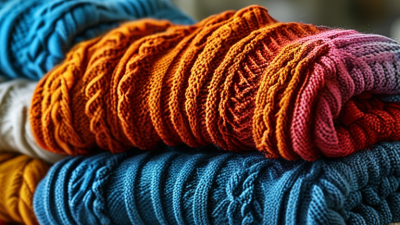
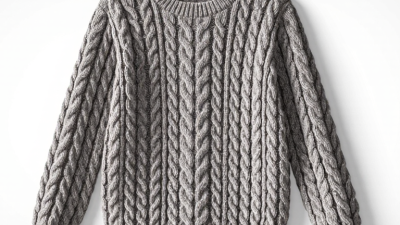
A cable knit sweater is defined by raised, crossing stitches that form rope-like patterns across the fabric. The effect comes from moving groups of stitches across one another during knitting, often with a cable needle. Those crossings create texture and gentle shadows. They also make the fabric thicker in patterned areas.
Look closely at the front panel. You may see narrow twists, broad braids, or diamond shapes arranged in repeating columns. A well-made cable should have clear definition without feeling stiff or bulky. Check the reverse side, too; loose floats or uneven tension can weaken the finish. Small variations may appear in handmade production, but inconsistent cable spacing deserves attention.
The yarn and construction shape how a sweater performs. Wool often provides warmth and spring, while cotton can feel cooler and heavier. A tighter gauge can sharpen the motif, though it may reduce softness and drape. Touch the fabric, stretch a cuff gently, and inspect the seams at the shoulders. The fit should allow movement without pulling the cables out of shape. Not every flaw is easy to judge from a product photo. Even experienced buyers can miss subtle tension differences, so a physical sample remains useful.
How China’s Cable Knit Sweater Manufacturing Industry Operates
China’s cable-knit sweater industry combines yarn sourcing, pattern development, knitting, linking, washing, and inspection. Some factories manage several steps in-house; others coordinate with specialist partners. That difference can affect sampling speed and production control. Ask who handles each stage.
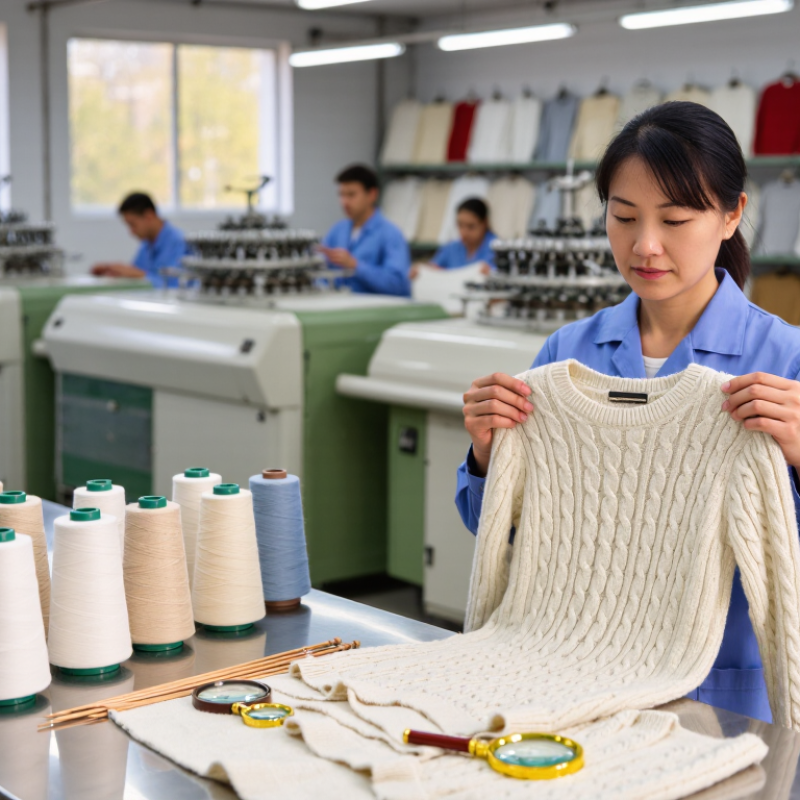
The process often begins with a yarn specification and a knitted swatch. Technicians check cable definition, fabric weight, stretch, and hand feel before grading the pattern across sizes. On the factory floor, computerized flat-knitting machines create panels, while workers link seams and inspect stitch alignment. Small variations matter. A cable can look sharp on a sample yet soften after washing.
Reliable manufacturers document measurements, yarn lots, and inspection results, then share clear sample and production timelines. Buyers should confirm minimum quantities, testing arrangements, and how defects are recorded. A video call can show machine capacity, but it cannot replace reviewing a physical sample. Be cautious when every request receives an immediate yes. Cable patterns consume yarn and knitting time, and tight deadlines may limit careful finishing. Even experienced teams sometimes need another sample round. That is not failure; it is useful feedback.
What to Evaluate When Choosing a Chinese Sweater Manufacturer
Choosing a Chinese cable knit sweater manufacturer takes more than comparing quotations. Ask how the factory controls yarn selection, knitting gauge, and cable definition across sizes. Request a sample made with the proposed yarn, not a showroom substitute. Inspect the reverse side, where loose floats and uneven tension can reveal rushed work. Small details matter.
Test the sample after washing. Record measurements before and after, then check whether rib cuffs recover and seams stay flat. Ask for written tolerances, size-grading rules, and inspection points for bulk production. A clear answer should explain who checks each stage and how defects are recorded. If possible, review production photos or arrange a factory visit; documents alone cannot show daily practice. Ask for proof.
Discuss order minimums, lead times, yarn sourcing, and capacity during peak season. Confirm which steps happen in-house and which are subcontracted, especially linking, washing, and finishing. Request current test reports for relevant performance claims, and verify their scope and date. A polished sample can still hide a weak process. That is not an automatic reason to reject a supplier, but it is a reason to consider a small pilot order and closer checks. The right partner communicates delays early and explains trade-offs plainly. Some answers may remain imperfect; record them before approving production.
How Cable Knit Sweaters Are Designed, Produced, and Quality-Checked
Best Cable Knit Sweater Manufacturer in China?
Cable-knit sweaters start with choices that shape both appearance and wear. Designers sketch cable patterns, then map them onto a stitch chart. The yarn matters. Wool, cotton, and blended fibers behave differently under tension, washing, and repeated wear. A sample helps reveal these differences before bulk production begins. Small pattern changes can affect fabric weight and fit.
Knitting technicians set the machine gauge and test cable crossings on a swatch. The cables should look defined without pulling the fabric out of shape. After knitting, panels are linked or sewn together, then finished to even out their texture. Sleeves and shoulders need careful alignment. One uneven seam can interrupt an otherwise balanced pattern. Sometimes the first sample still feels too stiff. That is worth revisiting.
Quality checks should cover measurements, stitch consistency, seam strength, and loose yarn ends. Inspectors can compare garment dimensions with the approved size chart and examine cable sections under steady light. A wash test may show shrinkage, color change, or unexpected twisting. Not every flaw is obvious at first glance. Recording issues and adjusting the next production run helps make quality checks useful, rather than merely procedural.
How to Compare Manufacturers for Your Sourcing Requirements
When comparing cable knit sweater manufacturers in China, look beyond a polished sample. Ask how the factory controls cable definition, stitch tension, and garment measurements across a full production run. A clear cable pattern should remain visible after washing, not just under showroom lights. Request a pre-production sample using the intended yarn and knitting gauge.
Check the yarn specification, size range, minimum order quantity, and sampling timeline in writing. Compare quotes line by line: yarn content, trims, washing, packing, and inspection can change the real unit cost. Ask for recent production examples with similar stitch complexity. Then discuss how defects are recorded and corrected. A useful answer names the check, the responsible team, and the remedy. Vague promises are not enough.
Communication matters. Send a measurement sheet and a marked-up sample photo, then see whether the manufacturer flags unclear points before production. That matters. If possible, review the facility or arrange an independent production check. Confirm capacity during your target season, since a capable workshop may still be fully booked. I have seen sourcing plans focus heavily on price and miss the cost of repeated sample revisions. Not always. A lower quote can still be the better fit, but only when quality expectations, lead times, and change procedures are specific. Even careful comparisons leave some uncertainty, so keep approval samples and written records.
Best Cable Knit Sweater Manufacturer in China? How to Compare Manufacturers for Your Sourcing Requirements
Suggested evaluation weights for comparing manufacturers. These are buyer-planning recommendations, not survey results or ratings of specific companies.
Use these weights as a starting point, then adjust them to match your priorities. Compare suppliers using the same specifications, sample requirements, and evidence criteria.