Leave Your Message

10 Best Cable Knit Sweater Manufacturers Worldwide?

Choosing the right Cable Knit Sweater manufacturer requires more than comparing catalog photos and quoted prices. A polished website can hide inconsistent sizing, weak stitching, or unreliable delivery schedules. This guide examines 10 leading manufacturers worldwide through practical sourcing criteria, including production experience, knitting capability, material quality, factory communication, and quality control.

The evaluation considers how each supplier handles cable definition, yarn selection, gauge, and finishing. These details shape the sweater’s weight, softness, durability, and appearance after washing. Sample development matters, too. A strong manufacturer should provide clear measurements, realistic production timelines, and transparent minimum order quantities. Factory audits, recognized certifications, and traceable material documentation can further support responsible purchasing decisions.

Real-world buyers also need to consider regional strengths. Some manufacturers may offer advanced wool processing, while others specialize in cotton blends, recycled fibers, or flexible small-batch production. Shipping distance, import procedures, and communication hours can affect the final cost. Not every supplier performs equally across every category. No ranking is flawless. A low price may reflect efficient production, or it may signal compromises in yarn quality and inspection standards. Buyers should request samples, test shrinkage, inspect seams, and confirm color consistency before placing larger orders. This overview offers a practical starting point for brands, retailers, and sourcing teams seeking dependable Cable Knit Sweater production partners. Teams should still verify current certifications, factory capacity, and commercial terms directly with each manufacturer.
10 Best Cable Knit Sweater Manufacturers Worldwide?

What Defines a High-Quality Cable Knit Sweater Manufacturer

What Defines a High-Quality Cable Knit Sweater Manufacturer

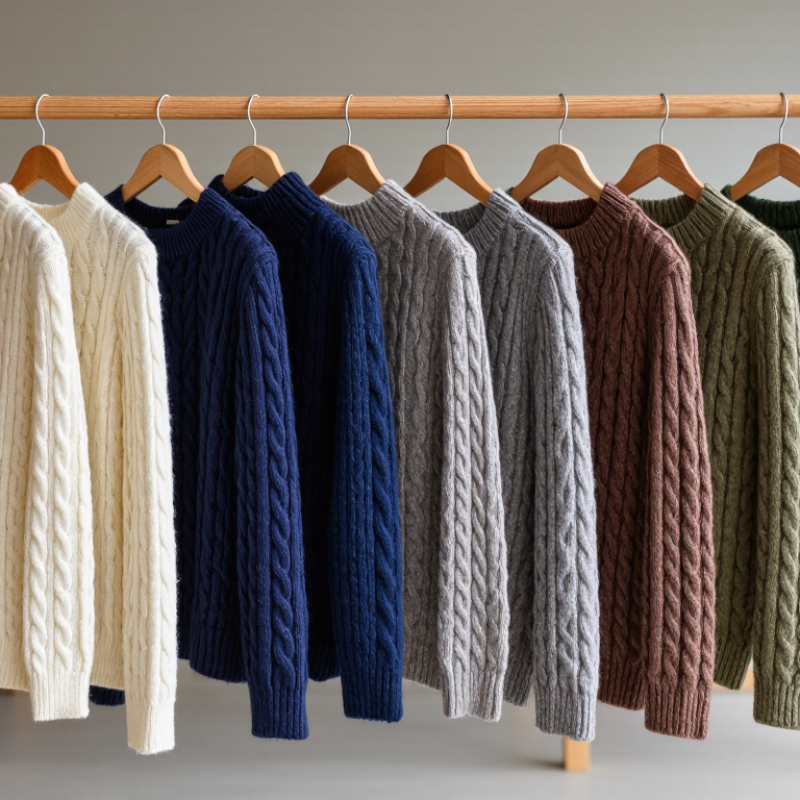
A high-quality cable knit sweater manufacturer combines skilled craftsmanship with controlled production systems. The cable pattern should look raised, balanced, and consistent across the front and sleeves. Uneven twists often reveal poor tension control. Experienced technicians check yarn strength, stitch density, shrinkage, and color stability before bulk production. They also understand how different fibers react after washing. Wool may soften, while cotton can lose shape without proper finishing. Reliable manufacturers provide measurable test results, not vague promises. Their samples should show clean seams, secure cuffs, and comfortable necklines. Small details matter.

A strong manufacturer also manages communication and traceability. Ask how they record yarn lots, inspect panels, and correct production defects. Factory visits, technical documents, and independent testing can strengthen confidence. However, one attractive sample is not enough. I have seen excellent prototypes fail during larger orders because tension changed between machines. That mistake deserves attention. A dependable supplier explains risks early, offers realistic lead times, and accepts reasonable quality inspections. Certifications can help, but they should support evidence rather than replace it. Transparent factories discuss limitations honestly.

Tips: Request a pre-production sample and wash it several times. Measure sleeve length, body width, cable alignment, and fabric recovery afterward. Ask for inspection records and defect tolerances. Confirm who approves shade changes. Keep written specifications. Clear records prevent expensive misunderstandings.
Key Criteria for Evaluating Global Sweater Manufacturers

Evaluating global sweater manufacturers requires more than comparing catalog photos and quoted prices. Cable knit garments need consistent tension, clean pattern definition, and stable measurements after washing. Request a pre-production sample in the exact yarn, gauge, and color planned for bulk production. Measure the chest, sleeve length, rib recovery, and shrinkage after three wash cycles. A beautiful sample can still hide weak quality control.

Review the factory’s production records, not only its presentation materials. Ask about monthly capacity, minimum order quantities, lead times, and backup equipment. Check whether inspectors test pilling, colorfastness, seam strength, and yarn composition. Traceable yarn documentation adds credibility, especially when several production sites are involved. Independent audits can also clarify workplace conditions and environmental practices.

Visit the facility when possible. Observe knitting machines, linking stations, repair tables, and finished-goods storage. Speak with technical staff, not only sales representatives. Their answers often reveal practical expertise. Reliable manufacturers explain defects openly and propose measurable corrections. Vague promises deserve caution.

Communication matters. A supplier should confirm measurement tolerances, approved samples, packaging details, and revision deadlines in writing. Time-zone differences can create small errors. Small errors become expensive.

Price remains relevant, but the lowest offer may reflect thinner yarn, rushed inspection, or hidden rework costs. I would also test a smaller pilot order before committing to large volumes. This step slows purchasing, yet it exposes weaknesses early. No evaluation method is perfect; even experienced buyers can overvalue polished facilities and underestimate production variability.

Regional Overview of Cable Knit Sweater Production

Regional Overview of Cable Knit Sweater Production

Cable knit sweater production follows wider apparel manufacturing patterns. The WTO’s World Trade Statistical Review 2024 recorded China as the largest clothing exporter in 2023, with exports near US$165 billion. Bangladesh followed at approximately US$47 billion, while Vietnam reached about US$44 billion. These figures cover all clothing categories, not cable knitwear alone. They still reveal strong production capacity, supplier networks, and export infrastructure.

China remains important for complex knit structures, yarn sourcing, and flexible order volumes. Bangladesh offers large-scale labor capacity, especially for basic sweaters and seasonal programs. Vietnam combines modern factories with growing technical knitting skills. Türkiye serves nearby European markets, reducing transport time and supporting smaller replenishment orders. Italy and Portugal focus more on craftsmanship, finer yarns, and premium finishing. The International Trade Centre’s Trade Map data supports this regional contrast through apparel export values and market access records.

Materials also shape manufacturing decisions. Textile Exchange’s Materials Market Report 2024 estimated global fiber production at about 124 million tonnes in 2023, with continued growth expected by 2030. Cotton, wool, acrylic, and recycled fibers each change cable definition, weight, shrinkage, and cost. A dense cable pattern can require slower knitting and careful blocking. Small factories may deliver better attention, but their capacity can be less predictable. That matters. Report data is useful, yet imperfect, because cable knit sweaters are rarely separated as a standalone trade category. Supplier audits should therefore examine machine gauge, yarn traceability, defect rates, and verified production samples.

Profiles of the 10 Best Cable Knit Sweater Manufacturers

Profiles of the 10 Best Cable Knit Sweater Manufacturers

The ten manufacturers below represent strong production models, not a perfect ranking. Selection considers stitch accuracy, yarn control, sampling speed, worker standards, and export experience. A 2024 Textile Exchange report states that global fiber production reached 124 million tonnes in 2023. It may reach 160 million tonnes by 2030. That growth makes responsible sourcing increasingly important.

A British manufacturer suits heritage patterns and small seasonal runs. A Portuguese facility offers precise linking and flexible sampling. An Italian workshop provides refined hand-finishing, though prices can rise sharply. A Turkish producer combines spinning, knitting, and faster replenishment.

A Chinese factory supports large orders and complex computerized cables. A Bangladeshi exporter focuses on competitive pricing and lightweight wool blends. An Indian unit adds hand-linked details and cotton-wool options. A Peruvian manufacturer is suitable for traceable alpaca and soft natural fibers.

A Lithuanian factory serves smaller Nordic-style collections with compact production. A Vietnamese producer offers automated knitting and efficient labor planning. These profiles sound clear, but factory capability can change between seasons.

Tips

Request a physical cable-knit sample before signing. Check stitch tension after washing. Ask for fiber certificates, audit dates, minimum order quantities, and repair policies. Do not judge quality from photographs alone. A dense sweater may feel impressive, yet poor linking can cause uncomfortable seams. Lead times also deserve scrutiny; holiday capacity often exposes weak planning. Data sheets help, but a hands-on inspection remains more reliable.

How to Select the Right Manufacturer for Your Brand

Selecting the right cable knit sweater manufacturer requires more than comparing online rankings. Start with the sweater’s technical demands, not a supplier’s reputation. Define the yarn composition, cable depth, stitch gauge, target weight, color range, and expected retail price. Samples reveal more. Request a development sample and measure its chest width, sleeve length, recovery, and shrinkage after washing.

A capable manufacturer should explain how yarn tension affects cable definition and hand feel. Ask about knitting machines, linking methods, finishing processes, and quality checkpoints. Request records for yarn testing, color fastness, pilling resistance, and dimensional stability. A factory audit, video inspection, or independent quality check can confirm whether production matches its claims. Details matter.

Commercial terms also deserve careful review. Compare minimum order quantities, sampling fees, production lead times, payment stages, packaging standards, and remake policies. Reliable suppliers communicate delays before they become expensive problems. Check their experience with similar sweater structures, because cable patterns can create uneven tension around seams and armholes. A low quotation may hide weaker yarn or rushed finishing. I have learned that choosing the cheapest option can create more work later. Even experienced teams can miss a measurement. Keep testing. Build a small pilot order, record every adjustment, and judge the manufacturer by consistent performance rather than polished promises.

10 Best Cable Knit Sweater Manufacturers Worldwide? - How to Select the Right Manufacturer for Your Brand
No. Selection Dimension Recommended Benchmark What a Strong Manufacturer Should Offer How to Verify
1 Cable-Knit Expertise At least 3 years of relevant knitwear experience Demonstrated experience with Aran, fisherman, honeycomb, diamond, and mixed cable structures, including consistent stitch definition. Review recent technical samples, stitch charts, production photos, and approved pre-production samples.
2 Knitting Gauge 5GG, 7GG, 9GG, and 12GG capability Access to multiple gauges allows the supplier to produce chunky winter sweaters as well as lighter transitional styles. Request samples from at least two gauges and compare weight, handle, dimensions, and cable clarity.
3 Material Range Wool, cotton, cashmere, alpaca, viscose, and recycled blends Ability to work with natural, regenerated, and recycled fibers while maintaining reliable yarn tension and dimensional stability. Ask for fiber-content documentation, yarn test reports, color cards, and wash-test results.
4 Minimum Order Quantity Approximately 100–500 pieces per style and color Flexible order quantities are valuable for emerging brands, seasonal capsules, and demand-testing programs. Confirm whether minimums apply per style, color, size range, or total purchase order.
5 Sampling Capability First sample in 7–21 calendar days A capable development team can interpret tech packs, adjust cable proportions, and complete fit revisions without excessive delays. Measure response time, sample accuracy, revision policy, and sample-to-bulk consistency.
6 Production Lead Time Approximately 45–90 calendar days after approval Lead time should cover yarn booking, knitting, linking, washing, pressing, quality inspection, and packing. Request a written production schedule with milestone dates and capacity confirmation for peak seasons.
7 Quality-Control System Inline inspection plus final AQL-based inspection Controls should cover stitch uniformity, measurements, shade matching, pilling, holes, loose ends, linking, and garment appearance. Review inspection checklists, defect classifications, measurement tolerances, and corrective-action records.
8 Compliance Documentation Relevant social, chemical, and product-safety documentation Depending on the destination market, documentation may include OEKO-TEX® Standard 100, REACH-related chemical compliance, ISO 9001, or recognized social-audit reports. Check certificate scope, certificate validity, issuing organization, facility address, and product applicability.
9 Sustainability Practices Traceable fibers and documented waste-reduction procedures Preferred practices include recycled yarn options, responsible fiber sourcing, efficient cutting and knitting, wastewater controls, and reduced packaging. Request transaction certificates where applicable, fiber traceability records, waste data, and packaging specifications.
10 Export and Communication Readiness Clear English documentation and experience with international shipping The manufacturer should manage commercial invoices, packing lists, carton details, shipping terms, labeling, and production updates accurately. Evaluate quotation clarity, response times, Incoterms® knowledge, export references, and documentation accuracy.
Practical evaluation rule: Shortlist manufacturers that meet the technical, quality, compliance, and lead-time benchmarks first. Compare pricing only after confirming yarn specifications, cable structure, garment weight, packaging, payment terms, and shipping conditions.