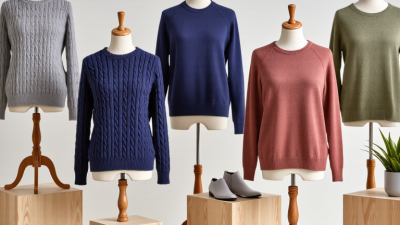
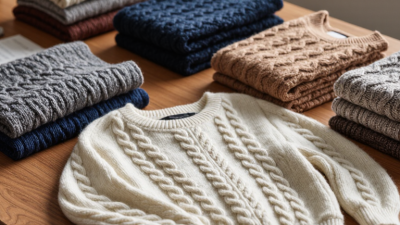
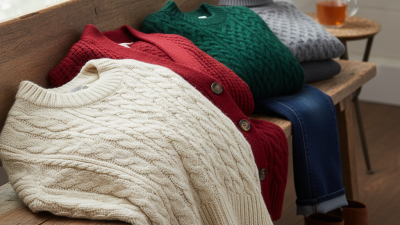
What Are the Top Cable Knit Sweatshirt Suppliers?
Finding the right Cable Knit Sweatshirt supplier requires more than comparing catalog photos. A textured knit may look soft online, yet feel heavy, scratchy, or uneven in person. Experienced buyers inspect yarn composition, stitch definition, fabric recovery, and seam strength before approving production.
This guide examines suppliers through practical sourcing criteria. It considers factory experience, sample quality, minimum order quantities, production capacity, and communication standards. Certifications also matter. Responsible suppliers should provide clear information about fiber content, workplace practices, and quality-control procedures. These details help reduce surprises during bulk production.
Small differences can change the final garment. A tighter cable pattern may improve warmth but increase material use. A looser structure may lower costs but lose its shape after washing. Color matching also deserves attention, especially with cream, oatmeal, and heathered shades. Screen images are unreliable.
No supplier is perfect. Some factories offer excellent craftsmanship but limited customization. Others provide competitive pricing while requiring larger orders. A polished website does not prove manufacturing capability. Factory videos can be useful, but independent samples and direct questions reveal more.
The following supplier comparison focuses on evidence rather than attractive promises. It highlights potential strengths, practical limitations, and questions worth asking before placing an order. Product testing remains essential. Even a promising sample may fail after repeated washing, packaging, or long-distance shipping. Careful evaluation supports better decisions for brands, retailers, and private-label buyers seeking dependable knitwear production.
Define Cable-Knit Sweatshirts by Fiber, Gauge, GSM, and Construction
Top cable knit sweatshirt suppliers should explain the garment through measurable specifications, not attractive photographs. Fiber is the starting point. Combed cotton feels breathable, while wool adds warmth and natural elasticity. Acrylic can improve color stability and reduce cost, but may pill under harsh friction. Blended yarns need exact fiber percentages. I always request a physical sample, then check softness, odor, shedding, and recovery after washing. Fiber claims without test records deserve caution.
Gauge describes stitch density. A lower gauge usually creates a heavier, more visibly textured knit. A higher gauge produces a finer surface and lighter hand feel. Cable designs consume more yarn than plain jersey, so gauge alone cannot predict weight. GSM measures fabric weight per square meter. Ask whether the figure is recorded before or after washing. A 420 GSM sweatshirt may feel firm, while another feels loose because its yarn and tension differ.
Construction reveals supplier skill. Examine cable depth, stitch consistency, shoulder shaping, seam strength, and cuff recovery. Tightly linked panels can reduce distortion, but excessive tension may create stiffness. Suppliers should provide shrinkage, pilling, colorfastness, and dimensional stability data. A useful trial includes several sizes, because grading can disturb cable alignment. I once judged a sample too quickly; its surface looked excellent, but the cuffs relaxed after three washes. That mistake remains a practical reminder: reliable sourcing requires repeated inspection, not one successful approval.
Size the Fiber Market: 124 Million Tonnes Produced in 2023 (Textile Exchange)
What Are the Top Cable Knit Sweatshirt Suppliers?
The global fiber market reached 124 million tonnes in 2023, according to Textile Exchange. This figure shows the scale behind every cable knit sweatshirt. Fiber selection affects warmth, softness, durability, and environmental reporting. Suppliers should explain whether their yarn contains cotton, wool, recycled fibers, or blended materials. They should also provide verified production records, not vague sustainability claims.
The strongest suppliers usually control knitting, linking, washing, and finishing in one coordinated system. Ask for sample panels before placing an order. Examine the cable definition, stitch tension, sleeve shape, and seam recovery. A well-made sweatshirt should feel substantial without becoming stiff. Factory experience matters here. Small tension errors can distort the pattern after washing.
Reliable suppliers share fiber origin, dyeing details, test results, and production lead times. Useful documents may include fiber certificates, restricted-substance test reports, and social compliance audits. Yet paperwork alone cannot prove consistent quality. Request a recent production sample and compare it with the approved prototype. No checklist is perfect. I have seen attractive samples hide loose cuffs and uneven shoulders. This is where technical inspection becomes more valuable than polished sales language. Buyers should also question minimum order quantities, leftover yarn handling, packaging, and repair support. A supplier that answers clearly is often easier to manage when an order goes wrong.
Global Fiber Production by Fiber Type, 2023
The global fiber market produced approximately 124 million tonnes in 2023. Polyester and cotton accounted for the largest shares of total production.
Source: Textile Exchange, Materials Market Report. Volumes are estimated from the reported 2023 global total of 124 million tonnes and fiber-type shares.
Set Supplier Criteria: MOQ, Capacity, Lead Time, Quality, and Certifications
What Are the Top Cable Knit Sweatshirt Suppliers?
A reliable cable knit sweatshirt supplier must meet clear purchasing criteria. Start with MOQ, because a low minimum order reduces inventory risk for new collections. Ask whether the MOQ applies per color, size, or total style. Small details matter.
Textile Exchange’s 2024 Materials Market Report estimates global fiber production reached 124 million tonnes in 2023.
This scale makes capacity verification essential. Request monthly output, knitting-machine numbers, workforce details, and current production loading. A supplier promising unlimited capacity deserves careful review.
Lead time
Lead time should include yarn booking, knitting, linking, washing, inspection, and shipment. Ask for a dated production schedule, not a broad promise.
Cable knit styles
For cable knit styles, request pre-production samples because stitch density affects shrinkage and shape retention.
Require test records for measurements, colorfastness, pilling, and composition. Certifications should match the product, not merely decorate a sales presentation.
ISO 9001 can indicate a quality management system, while OEKO-TEX Standard 100 addresses harmful-substance testing.
GOTS may support organic-fiber claims when the complete supply chain qualifies. Verify certificate numbers independently.
We sometimes overvalue attractive samples. Production consistency matters more.
A practical supplier should also accept third-party inspections and explain corrective actions after defects appear.
Verify Traceability: Address 92 Million Tonnes of Annual Textile Waste (UNEP)
What Are the Top Cable Knit Sweatshirt Suppliers?
The strongest cable knit sweatshirt suppliers can show where each material begins. This matters as textile waste reaches 92 million tonnes annually, according to UNEP. A supplier should identify the yarn spinner, knitting facility, dye house, and finishing site. Each stage needs batch numbers and dated production records. During supplier reviews, I look for matching details across invoices, factory records, and shipment documents. A polished certificate alone is not enough. Traceability must follow the actual garment.
For cable knit products, ask how suppliers manage yarn waste, rejected panels, and leftover fabric. Request weight records before and after knitting. Compare those figures with the final shipment quantity. Recycled fibers also need clear sourcing evidence and chain-of-custody documentation. Mass-balance systems may be valid, but buyers should understand their limits. Factory audits can reveal storage problems, mixed batches, or inaccurate inventory. These issues are easy to miss during a video call. They deserve careful follow-up.
Tips:
Ask for a traceability map before ordering samples. Check one finished sweatshirt back to its yarn batch. Visit the facility when practical. Keep improvement targets realistic. Records may contain gaps. That is a reason to investigate, not to reject every supplier. A reliable partner admits weaknesses and provides a correction plan with dates, owners, and measurable results.
Rank Top Suppliers with a Weighted Scorecard and Factory Audit Data
Choosing the top cable knit sweatshirt suppliers requires more than comparing prices. A weighted scorecard creates a clearer ranking system. I recommend assigning 30% to product quality, 25% to factory audit results, 20% to delivery reliability, 15% to production capacity, and 10% to communication. This structure reflects real sourcing risks, not just attractive quotations.
Factory audit data should support every score. Review defect rates, machine maintenance, worker training records, inspection procedures, and corrective-action reports. During a site visit, check whether cable patterns remain consistent across panels. Examine loose threads, uneven tension, collar recovery, and shrinkage after washing. A supplier with 98% on-time delivery may still perform poorly if its defect rate is high. The strongest candidates usually show stable records across several production cycles, not one impressive month.
Tips: Request recent audit evidence, production samples, and references from comparable orders. Recalculate the score after sampling. Do not trust polished spreadsheets alone. In my experience, communication quality often predicts production trouble earlier than audit numbers. Still, this judgment is subjective and needs written evidence. Audit data can also become outdated quickly, especially after staff changes or subcontracting. A lower-ranked supplier may deserve a second review if its corrective actions are specific, dated, and verified. Perfect rankings are unrealistic. Human oversight remains necessary.