Buying Fashion Knitwear wholesale can look simple on a screen: choose a style, compare prices, and place an order. The real test comes later. A ribbed cuff may relax after washing, while a “soft” yarn can feel rough against the neck. Small details matter. Fashion designer Vivienne Westwood’s often-cited advice, “Buy less, choose well, make it last,” offers a useful principle for wholesale decisions. It is not a purchasing formula, but it reminds buyers to assess durability alongside price. This introduction sets the stage for ten practical tips on choosing knitwear products and suppliers with care.
A dependable buying process begins with a physical sample. Check fiber content, gauge, seams, finishing, color consistency, and care instructions. Compare the sample with the approved specification. Ask about minimum order quantities, production timelines, size grading, and how defects are handled. Request current test reports or certification documents where relevant, then verify their scope rather than relying on a logo. Review repeat-order consistency, too. A low unit cost can become expensive when fit varies or delivery misses the selling window. Not every risk can be removed. Compare landed costs and order volumes with actual demand, not optimism. These tips are practical, not infallible; even careful teams sometimes misread a trend. A measured order and clear written terms can help limit that mistake.
Define your market before selecting yarn or gauge. A boutique serving cool coastal towns may need breathable cotton blends and soft cardigans. A commuter-focused retailer may prefer fine-gauge layers that fit beneath jackets. McKinsey’s State of Fashion 2024 report found that 71% of surveyed fashion executives expected shoppers to prioritize value for money. That makes target price and expected wear important buying criteria, not afterthoughts.
Tip 1: Build a simple customer profile. Record climate, preferred fit, age range, buying occasion, and typical spend. Then define practical product requirements: fiber content, weight, gauge, size range, colors, and acceptable shrinkage. “Premium” is vague. “Machine-washable, midweight, and under a set wholesale cost” is easier to assess.
Tip 2: Test requirements against real samples. Check seams, pilling, recovery, and hand feel after washing. Ask suppliers for consistent specifications and sample lead times before placing a bulk order. A beautiful swatch can still become too warm or lose its shape. I would not assume one sample represents every production batch; that assumption deserves a second look. Keep notes, even when the differences seem small.

A polished sample room can hide a weak supply chain. Ask each knitwear wholesaler for its registered business name, factory address, production capacity, and two recent trade references. Check the registration through the issuing authority, then contact references using independently sourced details. The 2023 Fashion Transparency Index assessed 250 major fashion brands and retailers, with an average score of 26%. The report measures public disclosure, not individual wholesalers, but it shows why confident sales claims are not the same as verifiable information. Ask who actually makes the garments, and whether the named supplier is a factory or a trading intermediary. Get the answer in writing.
Request dated test reports that match the exact yarn blend and product you plan to buy. Confirm the testing laboratory and report number directly; a generic certificate may cover different goods. Textile Exchange’s Materials Market Report 2024 estimates that global fiber production reached 124 million tonnes in 2023. That scale makes clear why traceability details matter, even for a small order. Compare a physical sample with the stated gauge, hand feel, seam finish, and care information. Check whether the sample and bulk order come from the same production site. A neat document folder helps. It is not proof by itself. I have seen buyers focus on unit price and miss a vague factory address; that mistake is easy to make, and worth questioning before paying a deposit.
When assessing wholesale knitwear, read the fiber content and feel the fabric. Merino wool can offer warmth with a soft hand, while cotton often feels cooler and heavier. Acrylic may reduce cost, but some blends pill quickly. Check the actual surface under bright light. Loose fibers, thin patches, or uneven color deserve questions. A label alone cannot tell you how a sweater will behave after washing. Request a sample and follow its care instructions before placing a large order. Small test, useful evidence.
Construction matters just as much. Look closely at the seams, cuffs, and neckline. Stitches should appear even, with no loose loops or strained joins. Gently stretch a cuff, then see whether it returns to shape. It may not recover perfectly, and that is worth noting. Compare garment measurements with your own size chart, not just S, M, or L. Measure chest width, body length, and sleeve length on a flat sample. Ask how much variation occurs between pieces. A few centimeters can change the fit. Check several units from the same batch; one excellent sample does not prove consistent quality.
Minimum orders can change the real cost of a knitwear purchase. Ask whether the minimum applies to each style, color, or total order. A supplier might require 30 sweaters per color, even when your combined order is larger. Compare quotes using the same quantities, yarn composition, sizes, and finishing details. Small details matter. Request a sample and check its weight, seams, and measurements before approving bulk production.
Unit price is only one part of the calculation. Ask for price breaks at different quantities, and check whether packaging or custom labels add fees. It is easy to overfocus on the lowest quote; I still catch myself doing that. Shipping can change the comparison quickly. Confirm the dispatch window, estimated transit time, shipping method, and who pays any destination charges. A low price may not help if cartons arrive after your selling season.
Payment terms deserve the same careful comparison. Ask what deposit is required, when the balance is due, and which payment methods are accepted. Get every amount and deadline in a written quotation or invoice. Ask whether the quoted price is valid for a set period, since yarn costs and freight rates can shift. If an answer is vague, pause and request clarification. A few extra emails are less costly than assumptions.
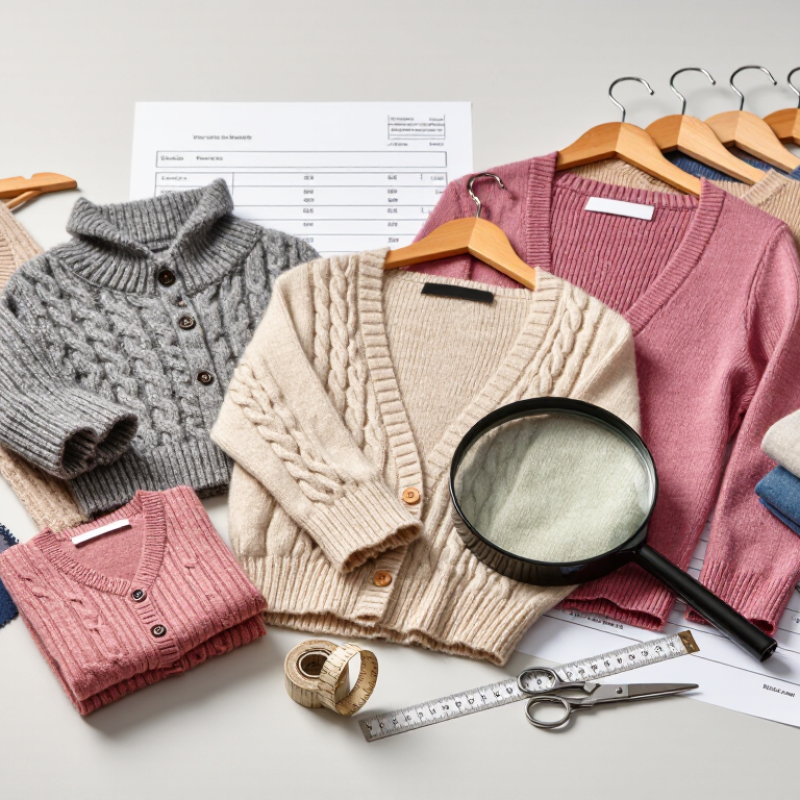
Before committing to a wholesale knitwear order, request samples in every planned yarn, color, and construction. Check each sample after washing it according to its care instructions; wool and cotton blends can change in length or softness. Measure the body and sleeves, then inspect cuffs, seams, and buttonholes for loose loops. Rub a pale cloth against darker yarn to spot color transfer. Small details matter.
Use the sample’s actual measurements to build a size plan rather than relying only on the supplier’s chart. Compare those measurements with your customers’ preferences and past sales, then estimate quantities by size and color. A spreadsheet can help reveal whether one shade is being ordered heavily without evidence of demand. Forecasts are guesses.
Set aside a small buffer for popular sizes, but avoid treating every style as a safe bet. Consider the season, delivery window, storage space, and how quickly your shop can sell heavier knits. Ask the supplier about production consistency and whether the bulk order will match the approved sample. Keep written notes and photos of the sample’s color, texture, and measurements. Plans can still miss; a slow-selling color or an unexpected fit issue may leave stock sitting on shelves. If the sample feels scratchier after washing, pause and reassess before confirming the full quantity.
Test Samples and Plan Inventory Before Placing a Bulk Order
Example allocation for a 1,000-unit order: quantities are distributed across sizes to illustrate an inventory plan, not a universal size curve. Test fit, fabric, and workmanship before ordering, then adjust the size mix using your own sales history and customer demand.