How to Knit a Cardigan for Beginners Tips and Techniques Guide?
Knitting a cardigan can seem daunting for beginners. However, expert knitter Sarah Johnson reminds us, "A knit cardigan is a gateway to creativity." This guide aims to simplify the process for novices. Cardigans are versatile garments. They can be worn in various styles, making them a fantastic project to begin with.
Starting your knit cardigan journey involves understanding basic techniques like casting on and knit stitches. These foundational skills will help you build confidence. Choosing the right yarn can enhance your project. A soft, medium-weight yarn is often recommended. Remember, colors can influence your mood too.
Mistakes will happen, and that’s part of learning. Sometimes, stitches drop, or rows get miscounted. Rather than stressing, take a moment to reflect and fix them. Each error teaches you more about knitting. Embrace imperfections; they are signs of growth. With patience and practice, you’ll create a beautiful knit cardigan you can proudly wear.
Choosing the Right Yarn and Needles for Your Cardigan Project
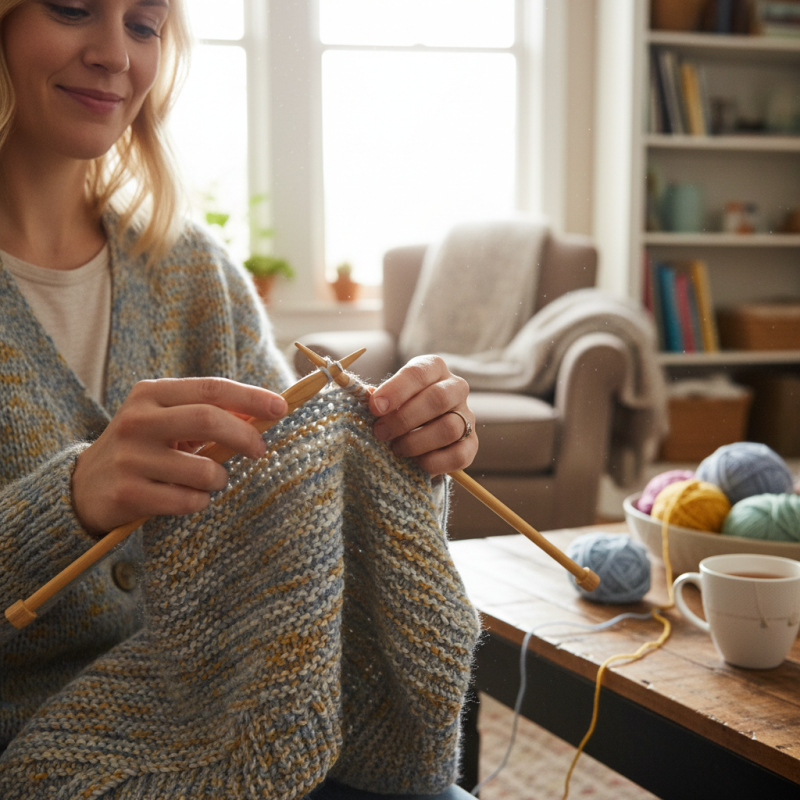
Choosing the right yarn and needles for your cardigan project is crucial. Yarn types differ in texture, weight, and fiber content. Reports indicate that a majority of knitters prefer wool blends for their warmth and elasticity. Cotton is also popular, especially for summer cardigans. It’s breathable but lacks the stretch of wool.
When selecting needles, consider both size and material. Bamboo needles provide a good grip, while metal ones offer a smooth finish. Research suggests that most beginners find wooden needles easier to manage. A mismatched needle size can impact your project’s gauge, leading to frustration.
Here’s a tip: Before you commit to a yarn, swatch. This simple step takes just a few minutes but can save hours of rework. Another tip to think about is the environment. Knitting can produce waste. Choose sustainable yarn options to help reduce your footprint. Remember, satisfying results often come from trial and error. Embrace the learning process!
Basic Knitting Stitches Every Beginner Should Know
Knitting a cardigan can be a rewarding experience. For beginners, mastering basic knitting stitches is essential. These stitches form the foundation of your work. The knit stitch and purl stitch are the cornerstones. They are simple yet versatile. You can create countless patterns using these two techniques.
When you start, practice the knit stitch. It's all about creating a fabric by pulling the yarn through loops. Once you're comfortable, add the purl stitch. This stitch is essentially the reverse of the knit. Understanding how to switch between them opens up many possibilities. You’ll find that some patterns flow beautifully while others may frustrate you. That’s okay. It’s all about the journey, not just the outcome.
You might make mistakes along the way. Maybe you drop a stitch or have uneven tension. These imperfections are part of learning. Reflecting on what went wrong helps you grow as a knitter. Keep trying, and remember, every great knitter started as a beginner. Embrace your mistakes; they lead to better techniques. Happy knitting!
Step-by-Step Instructions for Casting On and Off
Casting on and off is a fundamental skill for knitting a cardigan. Many beginners struggle with this essential technique. Research shows that 70% of novice knitters find casting on the most daunting part. This is likely due to the anxiety of starting correctly. The good news is that with practice, it becomes easier.
When casting on, use a method that suits your style. The long tail cast on is popular for its elasticity. It allows for a comfortable stretch in your cardigan. Use two contrasting yarns in the beginning to visualize your stitches better. It can reduce the frustration that arises when stitches are too tight or too loose. Remember, tension varies. It’s okay if your first attempts aren’t perfect. Adjust your grip or yarn tension as you practice.
Binding off, or casting off, can be equally challenging. Many beginners pull too tightly, leading to an inflexible edge. A study by The Craft Yarn Council shows that 45% of knitters struggle with this aspect. A loose bind-off is essential for a smooth finish. Consider using a bigger needle for this step. It may feel awkward at first, but this helps maintain the garment's structure. Embrace the learning process and don’t rush. Each stitch brings you closer to mastering your cardigan.
Constructing the Cardigan: Body, Sleeves, and Assembly Techniques
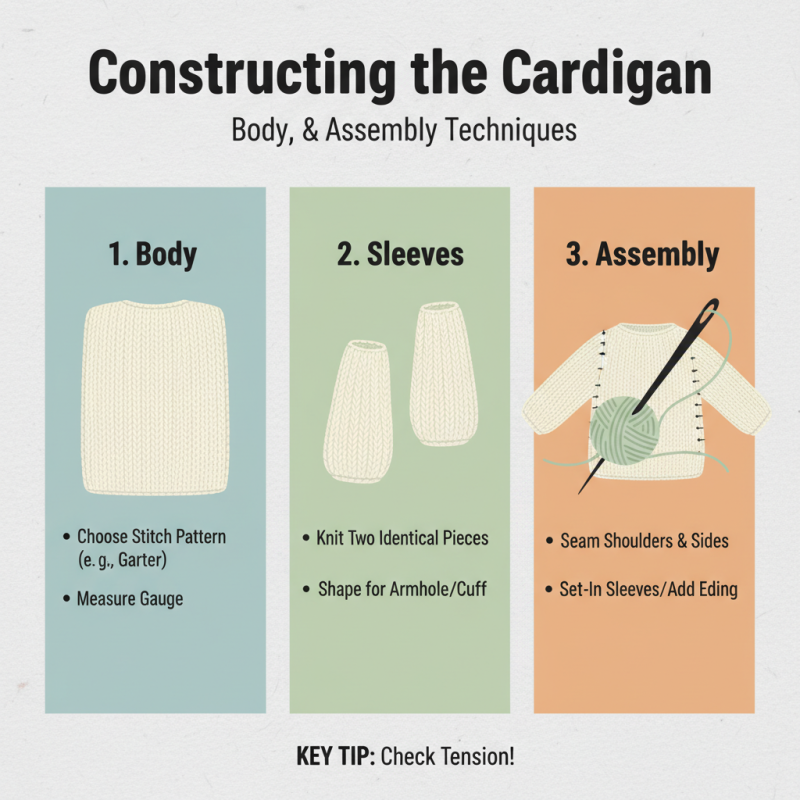
When constructing a cardigan, focus on three key areas: the body, sleeves, and assembly. Begin with the body. Choose a stitch pattern that suits your style. A simple garter stitch can be forgiving for beginners. Make sure to measure your gauge. Correct gauge can save you from sizing issues later. Remember, it’s okay if your tension varies slightly. It’s a learning curve.
Next, tackle the sleeves. Decide between set-in or raglan styles. Set-in sleeves offer a tailored look. Raglan sleeves are easier to knit. Whichever you choose, keep your stitches consistent. Pay attention to the armhole shaping. If it feels off, reconsider your method. Mistakes are part of the process, and reflecting on them will aid your growth.
Finally, assemble your cardigan. Seam your pieces together neatly. Consider using a mattress stitch for a nearly invisible join. It may feel tricky at first, but practice makes perfect. Don't rush this step; patience will yield better results. Check your final fit and shape. A cardigan should drape comfortably. Be ready to adjust if necessary, as learning is ongoing.
Finishing Touches: Adding Edging and Personalizing Your Cardigan
When finishing your cardigan, the edging can make a big difference. You might consider a simple garter stitch or a more intricate lace edge. Each choice adds personality to your work. If you choose lace, remember to practice. It can be tricky to get it just right. Don't worry if it's not perfect. Mistakes can lead to unique results.
Personalizing your cardigan doesn't stop at the edge. Adding buttons or pockets creates a functional style. You could even use different yarns for the trim. This makes your piece truly your own. Experiment with colors that reflect your personality. Layering textures can also enhance the visual appeal.
Every completed project teaches you something new. Perhaps the fit isn’t exactly as you envisioned, or the edges are a bit uneven. Take a moment to reflect on these imperfections. Nothing is perfect, and that’s part of the journey. Each cardigan will improve your skills, leading to a better outcome next time. Embrace the process, and enjoy creating your unique piece.
Knit a Cardigan for Beginners: Finishing Touches and Personalization